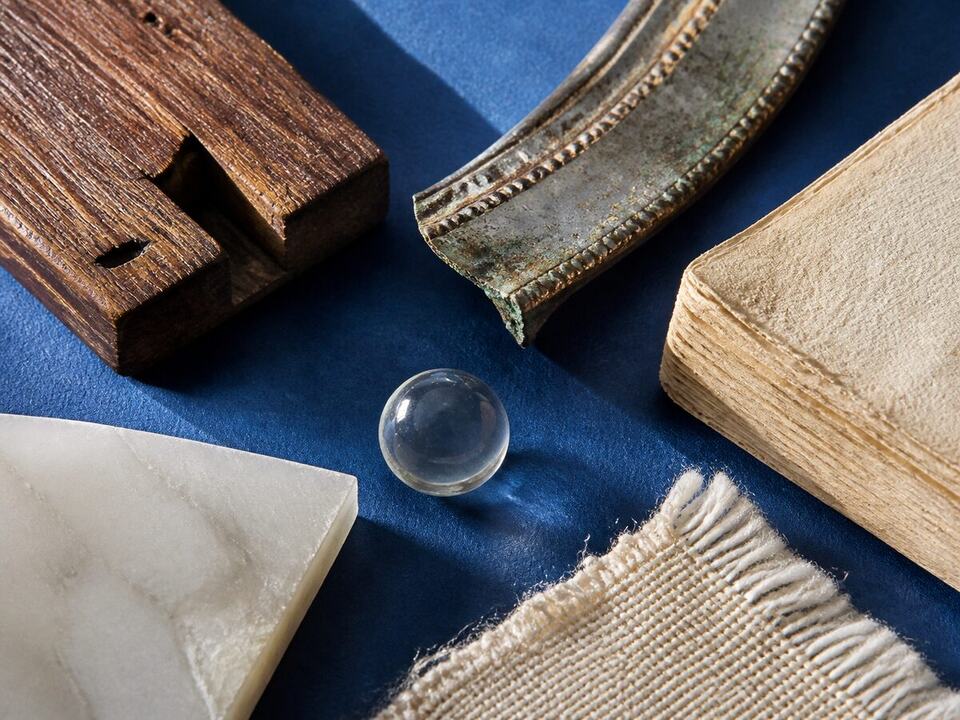
Material identification begins with observations that can be repeated: weight, grain, joins, fibers, translucency, corrosion, coating, and damage.
Material observation is a disciplined description of surfaces, joins, fibers, weight, translucency, grain, coatings, corrosion, and damage. It is not an instant authenticity test.
A reader can make a useful first record with a neutral light, a scale reference, and close views of joins and edges. Do not scrape, heat, bend, polish, or apply a chemical to make a clue appear.
Look
Start with what is visible and repeatable. On this subject, that means naming the form, the joining points, the surface, the scale, and the condition before reaching for a historical label.
Know
The documented context comes next. Church documents, collection records, and conservation guidance answer different questions, so a confident sentence should make its source family clear.
Do not infer
A photograph or seller’s phrase cannot establish every material, edition, date, blessing, provenance, or devotional effect. Keep the open question visible and choose the next check.
Field register
Record before namingVisible form, scale, parts, and surface.Context register
Material clues are partialUse the source family that can actually answer the question.Boundary register
Damage changes the questionStop where the object record stops.Record before naming
Material observation is a disciplined description of surfaces, joins, fibers, weight, translucency, grain, coatings, corrosion, and damage. It is not an instant authenticity test. The most useful description is concrete enough for another reader to check.
Material clues are partial
A reader can make a useful first record with a neutral light, a scale reference, and close views of joins and edges. Do not scrape, heat, bend, polish, or apply a chemical to make a clue appear. When sources disagree or the record is incomplete, the uncertainty belongs in the sentence.
Care stop
Damage changes the question
Stop before cleaning, polishing, washing, forcing, opening, or authenticating an object when its condition is fragile, its provenance matters, or the question belongs to a priest, publisher, seller, conservator, or other competent authority.